


Section 179 Tax Deduction for Mercedes-Benz Vehicles Near Columbus, OH

IRS Section 179 Guidelines for 2025
Section 179 of the IRS tax code allows businesses to deduct the price of qualifying equipment, such as vehicles, purchased or financed during the tax year. The Internal Revenue Service breaks down the list of vehicles that qualify for Section 179 deduction into three primary groups: Light, Heavy, and Other.
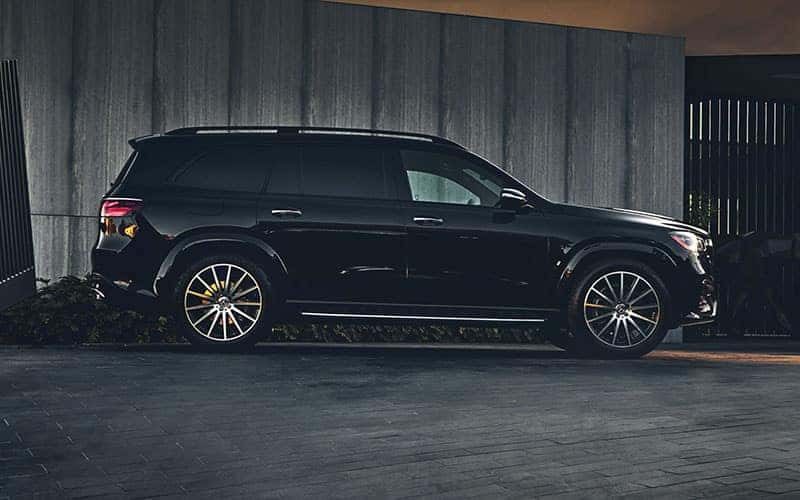
Several Mercedes-Benz SUVs meet the requirements of the “Heavy” category – which is defined as vehicles with a GVWR (gross vehicle weight rating) over 6,000 pounds, but not more than 14,000 pounds. These models include GLS-Class and G-Class (certain trim levels, GVWR may vary).
For the 2025 tax year, Section 179 allows for a maximum depreciation of $31,300 for “Heavy” vehicles in the current tax year, provided the vehicle is bought and put into service before January 1, 2026, and also meets certain other conditions below:
- The vehicle can be either new or used; however, it must be purchased in an “arm’s-length” transaction that has been financed with qualified loans and leases and the title of the vehicle must be in the company’s name and not in the name of the company owner.
- At least 50% of the time, the vehicle should be used for business purposes and if the vehicle is not used completely for business purposes, 100% of the time, then there is a reduction of depreciation limits by the corresponding percentage of personal usage.
- You can claim the Section 179 deduction only in the tax year in which the vehicle has been put into service i.e. when the vehicle is ready and available, although you are not using the vehicle.
- Also, a vehicle that has been used for personal purposes first does not qualify for the Section 179 deduction if its purpose is changed to business use in a later year.
- Note: Individual tax situations may vary. Please consult your tax advisor for complete details on rules applicable to your business.
Qualifying Models: GLS-Cass and G-Class (select trim levels, GVWR varies by trim)

IRS Section 168(k) “Bonus Depreciation”
Additionally, Section 168(k) allows for additional “Bonus Depreciation” amounting to 60% of the purchase price of a select Mercedes-Benz vehicle through the end of 2025. When added to the $31,300 from Section 179, this can deliver a dramatic first-year depreciation tax deduction for certain luxury SUVs purchased in 2025.
| Depreciation Example | “Heavy” Section 179 | “Light” Section 179 |
|---|---|---|
| 2025 IRS Section 179 Maximum 1st Year Depreciation | $31,300 | $12,200 |
| Section 168(k) Bonus Depreciation | 60% of Purchase Price | Capped at $8,000 for Luxury Vehicles |
| Qualifying Vehicles | New & Used | New & Used |
| Example Vehicle | Mercedes-Benz GLS 450 4MATIC® SUV | Competitor Luxury Sedan |
| Purchase Price | $90,525 | $90,525 |
| 1st Year Section 179 Maximum Depreciation | $31,300 | $12,200 |
| 1st Year Section 168(k) Bonus Depreciation | $54,315 | Capped at $8,000 |
| Total 1st Year Depreciation | $85,615 | $20,200 |
| Additional 1st Year Depreciation for “Heavy” Section 179 Vehicles | $65,615 | – |
Individual tax situations may vary. The information presented was accurate at time of publishing. Federal rules and tax guidelines are subject to change. Consult your tax advisor for complete details on rules applicable to your business.
**With Gross Vehicle Weight Ratings (GVWR) of more than 6,000 pounds, these select models are classified as “Heavy SUVs”. Gross Vehicle Weight Rating (GVWR) is the manufacturer’s rating of the vehicle’s maximum weight when fully loaded with people and cargo.
**REMINDER: If you have any questions, be sure to contact your tax professional for exact recommendations and rules related to Section 179 and vehicle eligibility.**
Luxury car depreciation can continue year two at $19,800, year three at $11,900, and subsequent years at $7,160 until the vehicle is fully depreciated or sold.
*Comparisons based on Section 179 and 168(k) of the Internal Revenue Code, which allows for additional first year depreciation for eligible “Heavy” vehicles and reflects figures for owners who purchase vehicles for 100 percent business use and place vehicles in service by January 1, 2026.