


Mercedes-Benz B Service

Similarities to A Service
All of the operations covered in the A Service are also covered by the B Service. The B Service is simply more comprehensive. Like an A Service, you’ll get an oil and filter change, a brake inspection, and a tire inspection. All of your other vehicle fluids will also be checked and topped up, if necessary, and your maintenance light will be reset. However, the B Service adds two additional bi-yearly services that are important for performance and safety. Some vehicles will have additional procedures and requirements for these services – it’s always best to consult your owner’s manual for specifics, or contact the service department here at Mercedes-Benz Easton for additional information. Here is what is included in an A Service:
- Mercedes-Benz motor oil replacement
- Oil filter replacement
- Fluid level inspection and corrections
- Tire inflation check and correction
- Brake component inspection
- Reset maintenance counter
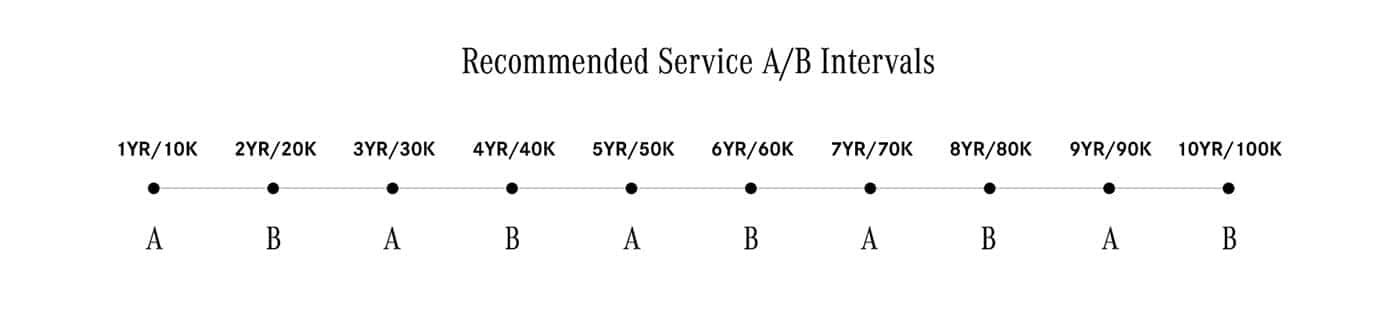
An A Service occurs after the first 10,000 miles or one year, and every other year thereafter. A Services and B Services alternate every two years or 20,000 miles. The handy chart above explains your service schedule.

Cabin Filter Replacement
Most of us have experienced allergic reactions to natural sources such as dust, pollen, and ragweed. When you use the climate control system in your Mercedes-Benz, a small filter purifies the air entering the cabin, preventing many of these harmful allergens from aggravating allergy symptoms. Over time, however, the filter becomes filled with these items, and becomes less effective. If you go for too long without replacing your air filter, you might notice an unpleasant odor inside your car when using the climate control system. Thankfully, the fix is easy – just keep up on your service schedule to ensure that you remain safe and healthy.
Brake Fluid Replacement
Brake performance degrades over time for several reasons. Friction gradually wears down both the pad and rotor surfaces, and will eventually require replacement. However, the hydraulic fluid that operates the braking system on your car is an important component that rarely gets the attention it deserves. Brake fluid has some key properties that make it effective for its chosen application. Brake fluid is very effective at transferring force into pressure, since fluids can not be compressed. Since the brake system works via friction, it’s important that the fluid used has a high boiling point as well.
Unfortunately, brake fluid, by its very nature, is hygroscopic, which means it retains moisture from the air. Even though the brake system is sealed, your brake fluid still accumulates small amounts of water over time. This gradually lowers the boiling point and reduces braking performance. Thankfully, the B Service replaces the brake fluid every two years or 20,000 miles, keeping your brake system performing like new at all times. When you need your brakes most, you’ll be glad that the fluid is fresh and in top condition.